
Category: Relationships & Advice

  • College Prep Series: Setting Yourself Up for Success When Applying for Scholarships

    College Prep Series: Setting Yourself Up for Success When Applying for Scholarships

    This article will explore the exciting journey of mastering time management for
    scholarship applications! Effective time management is essential in empowering
    busy parents and their college-bound students to navigate the scholarship
    process easily and successfully. Let’s dive in!

    1. Set Specific Goals: Break down the scholarship application process into manageable
      steps, such as researching scholarships, gathering materials (transcripts,
      recommendation letters), and writing the essay. Set deadlines for each step to keep
      yourself on track. Here is an easy-to-follow Weekly Scholarship Time Management
      Schedule.

    Sunday – Planning & Organization

    1–2 Hours: Plan & Organize the Week

    • Review the scholarship opportunities you’re applying for, including deadlines and
    • requirements.
    • Set weekly goals (e.g., complete an essay, request a recommendation letter,
    • submit one application).
    • Update your scholarship tracking sheet/spreadsheet with deadlines, materialsneeded, and status of your applications.
    • Break down larger tasks into smaller steps (e.g., “Draft intro paragraph for essay” or “Finalize recommendation letter request”).

    Monday – Scholarship Research & Essay Writing

    1 Hour: Research New Scholarships

    • Dedicate time to finding new scholarships for the week. Use scholarship search engines, and check for any local opportunities from businesses or community organizations.

    1–2 Hours: Work on Scholarship Essays

    • Write or revise scholarship essays. Aim to finish a draft for one essay by the end of the session.
    • Focus on one essay per session. Break it into smaller tasks (e.g., brainstorming, outlining, writing, revising).

    Insert Photo

    Tuesday – Essay Writing & Application Preparation

    1 Hour: Essay Review & Revision

    • Review and revise the scholarship essay you worked on Monday. Consider asking a teacher or family member to give feedback.

    1 Hour: Prepare Application Materials

    • Gather and review any application materials you need (e.g., resume, transcript, recommendation letters). Ensure everything is up-to-date.

    Wednesday – Recommendation Letters & Networking

    1 Hour: Request Recommendation Letters

    • Reach out to teachers, mentors, or community leaders for recommendation letters. Be polite and give them ample time (at least 2–3 weeks).
    • Provide them with your resume and any scholarship-specific information to help them write a strong letter.

    1 Hour: Work on Additional Essays

    • Continue working on scholarship essays. You could also start drafting personal statements if they’re needed for multiple applications.

    Thursday – Application & Scholarship Submission

    1 Hour: Submit Scholarships

    • If you have any scholarships due soon, aim to submit them today. Double-check that all materials (essays, recommendation letters, transcript) are uploaded.

    1 Hour: Work on Scholarship Essay #2

    • Keep working through scholarship essays. Aim to finish one more by the end of the session.

    Friday – Follow-up & Reflection

    1 Hour: Follow-up on Applications

    • Check the status of applications you’ve submitted (confirm they’ve been received, follow up on recommendations if needed).

    1 Hour: Reflect and Plan

    • Reflect on what you’ve accomplished during the week. Make adjustments to your plan if certain tasks need more time or attention.
    • Set your goals for the upcoming week.
    Desola Lanre-Ologun/Unsplash

    Saturday – Free Time/Buffer Time

    • Use this day as a buffer for catching up on any scholarship work you didn’t complete during the week.
    • 1–2 Hours (Optional): Relax and Recharge
    • Use the weekend to relax, recharge, and spend time with friends or family.
    • Balance is important to avoid burnout.

    LinkedIn Sales Solutions linkedinsalesnavigator/ Unsplash

    Dedicate Focused Time Blocks: Set aside specific blocks of time for
    scholarship work. Limit distractions during these periods and focus solely on
    completing applications. Even 30-to 60-minute intervals of deep focus can
    make a big difference.

    Prioritize Scholarships: Start with scholarships with the earliest deadlines or
    higher value. Prioritize those with fewer requirements and shorter essays to get
    them out of the way first.

    Batch Similar Tasks: If you must write multiple essays or gather the same
    materials for different scholarships, do them all simultaneously. This approach
    saves time and energy by minimizing switching between tasks.

    Use Templates: Create a template for recurring components like personal
    statements or essays that you can tweak for each scholarship. This way, you
    don’t have to start from scratch every time. The length of a personal statement
    for a scholarship application can vary depending on the specific scholarship
    requirements. However, most scholarship personal statements are typically
    around 500 to 1,000 words. For assistance with personal statements, Many
    teachers, especially English and writing teachers, are happy to help students
    with scholarship essays. They can provide feedback on structure, grammar,
    and clarity.

    Discover a wealth of inspiration by visiting Scholarships.com! Head over to the
    student resource tab, where you’ll find an array of sample personal statements
    designed to spark your creativity and help you craft a standout application.
    Don’t miss out!

    Stay Organized: Keep all scholarship materials organized in one place (digital
    or physical). This will help you quickly access everything you need, saving you
    time in the long run. See samples below.

    Create a Scholarship Tracking Spreadsheet

    What to Include:

    • Scholarship name
    • Deadline date
    • Eligibility criteria (GPA, activities, etc.)
    • Materials required (essay, transcript, recommendation letters, etc.)
    • Status (In progress, submitted, awarded)
    • Notes or special instructions

    How to Use It:

    • Update the spreadsheet every time you find a new scholarship.
    • Mark deadlines in bold to highlight the most urgent ones.
    • Use color-coding for quick reference (e.g., green for completed, yellow for in progress, red for approaching deadlines).

    Create Separate Folders for Each Scholarship

    Digital Folders:

    • Create a folder on your computer or cloud storage (Google Drive, Dropbox, etc.) with the scholarship name.
    • Within each folder, save:
    • Application forms
    • Essay drafts and final versions
    • Recommendation letters
    • Proof of eligibility (e.g., transcripts, test scores)
    • Any communication (emails with scholarship providers, submission confirmation, etc.)
    • Keep these folders organized in a way that makes sense to you—whether by category, date, or scholarship name.

    Physical Folders:

    • If you prefer paper copies, create a binder or folder with tabs for each scholarship.
    • Keep printed materials (applications, essays, recommendation letters) neatly organized by scholarship.

    Set Up a Deadline Calendar or Planner

    Digital Calendar:

    • Use Google Calendar, Apple Calendar, or any planner app to mark important scholarship deadlines.
    • Set up reminders several days or a week in advance so you can prepare all materials beforehand.

    Physical Planner:

    • If you prefer a paper planner, dedicate a section to scholarship deadlines.
    • Use sticky notes or highlighters to make important dates stand out.

    Use a “To-Do” List System

    Daily/Weekly Lists:

    • Make a list of scholarship tasks to complete each day or week, such as drafting essays, reviewing recommendation letters, or submitting applications.
    • Keep the list in your planner, notebook, or as a digital checklist (e.g., Google Keep, Todoist, or Trello).

    Break Down Tasks:

    • For large tasks (like writing an essay), break them down into smaller, manageable steps (e.g., brainstorming, outlining, first draft, revisions).

    Track Application Progress

    Application Submission Status:

    • Create a simple table or section in your tracking spreadsheet to mark the status of each scholarship (e.g., “Not Started,” “In progress,” “Submitted”).

    Follow-Up Dates:

    • If a scholarship requires additional follow-up (e.g., confirmation of submission, interview), include these follow-up dates and notes in your tracking system.

    Keep a Digital Backup

    Scan Physical Materials:

    • If you keep physical documents (e.g., printed essays, hard-copy transcripts), make sure to scan or take pictures of them so you have a backup in case anything is lost.

    Create Templates:

    • For repetitive materials like personal statements or resumes, keep a master template that you can quickly adapt for different scholarships.

    Organize Recommendation Letters

    Ask Early:

    • Request recommendation letters well in advance (at least 2-3 weeks). Keep a list of which teachers or mentors you’ve asked, and when they confirm, they’ll write them.

    Share Necessary Information:

    • Provide your recommenders with a detailed list of scholarships you’re applying for, as well as any specific requirements for the letter.

    Track Submitted Letters:

    • Confirm when your recommenders submit the letters, and keep a record of submission status (e.g., “Letter submitted to Scholarship X”).

    Create a “Scholarship Checklist”

    For Each Scholarship:

    • Make a checklist of all required materials (essay, resume, recommendation letter, transcript, etc.).
    • Check off items as you complete them.
    • Review the checklist before submission to ensure you haven’t missed anything.

    Christina @ wocintechchat.com/Unsplash

    Use Your Network

    Reach out to family through texts or emails about any available scholarships
    Connecting with college advisors and teachers is a great idea too. Many fast
    food and retail jobs offer scholarships, so don’t hesitate to ask at your
    workplace. Also, chat with friends in college about the scholarships they’ve
    applied for!

    Follow up

    It’s a great idea to send friendly follow-up calls and emails to confirm that
    your scholarship application has been received. Many applicants miss this
    crucial step, and a simple follow-up can make a real difference. Don’t forget,
    check your spam folder too! Your effort could pay off!

    By following these strategies, you’ll stay organized, reduce stress, and increase your
    chances of completing multiple scholarships efficiently!

    Omoyele Mcintosh is the founder of Fan Family Inc., a New York City-based service that
    focuses on college preparedness. She’s worked with countless parents and students,
    aiding them through the college process. She specifically exposes middle and high
    school students to both Ivy League and HBCU colleges through annual college campus
    tours. She serves as a resource by providing scholarship information and assistance
    with the FAFSA.


    Contact:
    Follow Fan Family Inc. on Instagram @FanFamilyInc
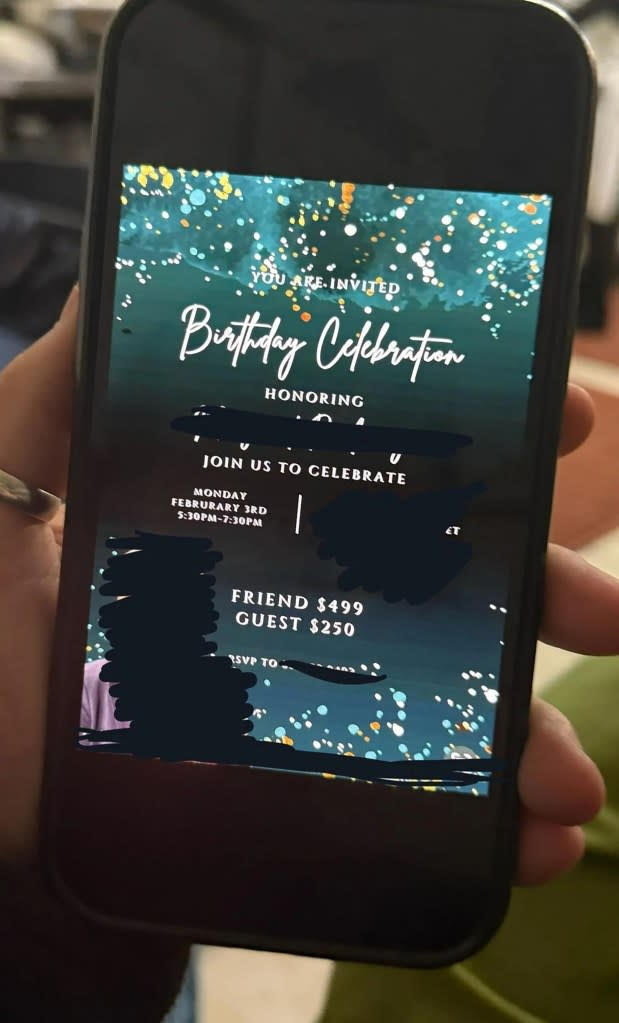
  • Friends Stunned After Birthday Girl Sends Invitation Charging Them $499 To Attend Her Two-Hour Party

    Friends Stunned After Birthday Girl Sends Invitation Charging Them $499 To Attend Her Two-Hour Party

    A woman was shocked to receive a birthday party invitation from a friend asking for a $499 fee for a two-hour event. Bringing a plus-one would cost an extra $250. The stunned woman uploaded a photo of the invitation on #Reddit, per The New York Post

    The unnamed woman wrote on Reddit, “Friend got elected for city council and purchased a new home and somehow this makes sense to her… Gotta pay the mortgage somehow.”

    Reddit users chimed in commenting on the price. Some revealed that the high price is “crazy,” and others wondered if it was actually a fundraising event pretending to be a birthday party. The invite didn’t say if it was an open bar or if food was included in the price. 

    #Clique, what are your thoughts? 

  • Woman Claims She Was Cut Off From Social Circle After Laughing At Friend’s Cringe Baby Name

    Woman Claims She Was Cut Off From Social Circle After Laughing At Friend’s Cringe Baby Name

    A woman claims her friend group has rejected her after she laughed at the baby name chosen by her friend. She shared her story on Reddit about her best friend “K,” per PEOPLE

    The shocked woman wrote in a Reddit post, “We’ve been talking about baby names for weeks, just throwing out ideas for fun… She even joked about some really insane names, and we laughed about how some people pick the most cringe stuff. So I thought we were on the same page about what was reasonable…..”

    However, a couple of days ago, her bestie finally selected a name for her baby. 

    “And it’s something straight out of Genshin Impactor Skyrim,” said the redditor as she referred to two video games. 

    Although the woman doesn’t reveal her friend’s chosen name for privacy reasons, she mentioned it was similar to names like “Zephyr Rocket” or “Banjo Fox.”

    “I honestly thought she was messing with me, so I laughed. Not like a mean laugh, just a genuine reaction like… wait.. shut up, what is the real name?,” she wrote. 

    “But nope. That was the real name. She got super quiet and was like.. that is the name. I could tell immediately I messed up, so I tried to backpedal, but she looked kinda hurt and changed the subject. Later, a mutual friend told me she was upset and thought I was being rude,” the post added. 

    The woman feels left out by her friend group after finding out she wasn’t invited to a recent gathering, subsequently realizing that she has been cut out. 

    “Literally everyone else was there. I found out after the fact, and its hard not to feel like its bc of the baby name thing,” the woman wrote. 

    “I really didn’t mean to be rude, I just genuinely thought she was joking based on our past Convos,” she went on to say. 

    #Clique, who was in the wrong? 

  • Navigating Parenting Styles in Relationships: What to Do When You Disagree

    Navigating Parenting Styles in Relationships: What to Do When You Disagree

    Parenting styles can break a relationship. For one, people from different backgrounds typically have differing ideas about parenting. If these differences are not extreme, they can still work it out. However, if they are vastly incomparable, parenting styles can cause trouble in a relationship. Navigating different parenting styles in a relationship can be tricky. In this article, you will learn what to do when you don’t agree with your partner’s parenting styles.

    Implications of Different Parenting Styles

    The average person typically parents the way he was raised. Therefore, people will often have diverse views on how to raise children. These differences can threaten a relationship’s health, especially if one or both partners have kids before entering that relationship. One partner may feel their partner is mistreating their children.

    In contrast, another person may think that the other person is coddling their children or preventing them from being proper parents, which can cause resentment and conflict. Therefore, learning how to navigate such situations will help preserve the relationship. Here’s what to do when you disagree with your partner’s parenting styles.

    Get To Know Them

    Sometimes, we judge based on what we see without knowledge of the context of the situation. This may prevent us from making the right call ignorantly. Therefore, if you observe your partner parenting differently from what you are used to or would like, take time to get to know them before judging.

    You should also observe the situation before objecting to their style. This will help you approach the matter appropriately. Knowing your partner will help you respect their style and signal your children to do the same. However, note that this advice does not apply to situations involving abuse.

    Extend Grace

    Studying your partner and acquiring adequate information will help you be more empathetic and understand their parenting styles and how their kids behave. Your partner may give their kids more screen time than you would normally allow a child, let them eat away from the dining table, watch TV while eating, speak while eating, or wear certain clothing.

    Regardless of how shocked you are, extend grace to them and permit these things as long as they are not harmful. You may find that these habits help your partner cope with raising children alone.

    Communicate

    If you are uncomfortable with your partner’s vastly different parenting styles, talk to them about it. Be prepared to have them reject your counsel or not be satisfied with their reasons, but you should not give up without trying. Sometimes, your partner may not know they are parenting wrongly, and if they are teachable, they will be happy to learn from you when they know you have the kids’ interests at heart.  

    You should also communicate with an open mind. Instead of thinking your way is best, be ready to learn from them. Also, you should never reprimand your partner in front of the kids. If you object to their parenting styles, wait until you are alone to correct them. Otherwise, you may confuse the kids or make them feel the other person hates them, which can lead to rebellion.

    Walk Away

    If you have given your partner time, tried and failed to understand their parenting styles, and communicated without any result, you may need to end the relationship. Some differences are irreconcilable, and staying will only end in heartache. Therefore, don’t feel guilty if you have to end the relationship. You will be doing the right thing for your children and theirs.

    Parenting styles are a big deal because they involve children. Therefore, don’t be afraid to explore all available options to be on the same page. However, feel free to end the relationship if you still can’t agree on the most important things.

    #Clique, what do you think about couples having different parenting styles? How will you navigate such a situation? Let us know in the comments.

  • 3 Key Signs You Need Couples Therapy to Strengthen Your Relationship

    3 Key Signs You Need Couples Therapy to Strengthen Your Relationship

    Every relationship experiences some form of turbulence at some point. Regardless of how much love and affection a couple once shared, they may question why they married their partner. Such feelings are normal because you can never fully know another person. Many marriages and relationships have dissolved at this point, but yours doesn’t have to. If you have started experiencing conflict in your relationship, it may be a sign that you need external intervention. In this article, you will discover three tips to help you determine when to get couples therapy to strengthen your relationship.

    Couples Therapy

    According to Verywell Mind, couples therapy is a type of psychotherapy or talk therapy that can help you and your partner improve your relationship. It helps resolve difficulties and rebuild relationships at any stage. People need couples therapy for several reasons, including dissatisfaction, infidelity, and disconnection in relationships. It can help couples address differing expectations, financial management, gender roles, or time spent together.

    Couples therapy has numerous benefits, including assisting couples to understand each other better, identifying underlying issues causing conflict, improving communication skills, strengthening the marriage bond, and improving relationship satisfaction. Here are three key signs you need couples therapy to strengthen your relationship.

    3 Key Signs You Need Couples Therapy

    Communication Problems and Conflict

    Effective communication is one of the keys to a rich and fulfilling relationship. Thus, when communication breaks down and partners no longer understand each other, they need couples therapy. Lack of communication leads to conflict and continuous arguments. Conflict is inevitable in any relationship, but it shouldn’t be frequent. Therefore, when you and your partner keep fighting over the same things and fail to understand each other, resentment may build up, further impacting communication.

    Couples therapy will help you both express your feelings in a safe place without the risk of it escalating. In contexts devoid of blame or attacks on each other, you can identify the issues causing recurring conflict and devise methods to work out lasting solutions. This way, you can respect each other’s feelings without walking on eggshells.

    Emotional Disconnection

    Sometimes, couples find that they are no longer attracted to each other. Other times, connecting with their partner may also be a struggle. Different situations can lead to this, including communication breakdown, resentment, infidelity, and lack of trust. If not addressed quickly, emotional disconnection can affect physical intimacy and other aspects of the relationship. Therefore, you must get couples therapy as soon as you notice this happening in your relationship.

    Thinking of Divorce

    Most people don’t just decide to divorce; they often consider other options and try their best before deciding to give up on a relationship. It’s like getting a million paper cuts and then deciding you have had enough. However, if you find yourself thinking of divorce or a breakup, you need to get couples therapy. Therapy can help you work through seemingly insurmountable challenges and address the issues contributing to your shaky relationship.

    Couples therapy will greatly help you if you are experiencing difficulty in your relationship. See a therapist before walking away from a broken relationship resulting from emotional disconnection, infidelity, bitterness, poor communication, and recurring conflicts.

    #Clique, do you think couples therapy is beneficial for couples? Have you ever been in one? Let us know in the comments.

  • How Social Media Impacts Relationships: Understanding the Effects on Connection and Communication

    How Social Media Impacts Relationships: Understanding the Effects on Connection and Communication

    Social media and its advantages and disadvantages are here to stay. The world operates as a globally interconnected village; hence, it is almost impossible not to use social media. However, as with everything else, social media has its pros and cons, which can make the user experience different for everyone. This applies to relationships, too, as social media can enhance relationships and foster love and peace. On the other hand, it can encourage infidelity and affect physical interactions. In the article, you will learn about social media’s positive and negative effects on communication and connection in relationships.

    Positive Effects of Social Media on Relationships

    Bridging Distance

    Numerous people work in countries and cities far away from where their loved ones are. If social media weren’t available, this situation would negatively affect their relationships. However, loved ones can stay connected at any time and spend as much time as they would if they were together physically by using social media.

    Relationships work better with social media because people can stay connected without worrying about call charges or other costs. Apps like FaceTime, Instagram, Facebook, and WhatsApp allow people to stay connected through updates and sharing other information.

    Improved Communication

    Social media allows people in romantic relationships or otherwise to communicate better. Whether they are far apart or together, everyone can benefit from the positive effects of social media. FaceTime, Instagram reels, and WhatsApp Voice and Video calls have gained popularity because they enhance communication. Additionally, those who find it difficult to express themselves can text to share their opinions or disagree with a viewpoint. Additionally, Emojis and GIFS can also bring humor to a relationship.

    Negative Effects of Social Media on Relationships

    Poor Communication Skills

    Unfortunately, social media has contributed to impaired communication skills, which also affects relationships. Many people cannot hold conversations or interact with others face-to-face when away from their phones. Sometimes, people organize meetups with friends and family but run out of topics to discuss. Others may not bother interacting but instead spend time on social media, a phenomenon called “phubbing.” Hence, social media can also impact social and communication skills.

    Reduced Quality Time

    Social media can also affect relationships when couples spend too much time online. Rather than sharing with their spouses or loved ones, many people choose to reveal too many details about their lives on social media. This habit can make their partners, friends, and family feel unwanted or undervalued. A 2021 study found that couples who spent more time on Instagram experienced reduced relationship satisfaction and a higher occurrence of conflict than those who didn’t.

    Emotional or Physical Infidelity

    Social media can also encourage infidelity in relationships. It gives people unfettered access to other people from different cities, countries, and continents. People can also have conversations with anyone at any time; hence, they may become attracted to or emotionally attached to those they talk to regularly.

    This can lead to emotional infidelity – where they start cheating in their minds – or physical cheating, and it can also lead to divorce, separation, dissatisfaction in the relationship, or breakup. Meanwhile, a 2017 study found that most of those who participate in social media-induced infidelity already had underlying issues in their relationships.

    Social media can help or destroy a relationship based on the users’ attitudes. Therefore, setting some rules or boundaries regarding its use may be helpful. Couples may decide to have restrictions on social media usage when they are together or decide against using it in the bedroom. Setting a time limit or turning off notifications can also help improve interaction within non-romantic relationships. Ultimately, you decide whether to reap social media’s positive or negative impacts.

    #Clique, what do you think of social media and relationships? Do you think its benefits outweigh the disadvantages? Let us know in the comments.

  • Expressing Your Needs in a Relationship: 3 Practical Ways to Strengthen Connection Without Being Overbearing

    Expressing Your Needs in a Relationship: 3 Practical Ways to Strengthen Connection Without Being Overbearing

    No relationship is perfect because there are no perfect humans. Hence, there will be oversights and, sometimes, unintentional neglect between two people in a healthy relationship. However, this does not have to happen if you learn to communicate your needs in a relationship. Your partner can’t read your mind, so they often can’t tell what you need, regardless of the signs you put out. Therefore, properly communicating your needs in a relationship will help you develop a better bond with your partner.

    How to Communicate Your Needs in a Relationship

    What you say is just as important as how you say it. Therefore, you must put adequate care and thought into how to present your needs. This way, your partner is more receptive to your demands. It also portrays you as a considerate person and not an overbearing person. Your needs are important, whether for more time together or separately, and your loved one’s feelings are also important. Here are three strategies to help you strengthen your connection without being overbearing.

    1. Choose the Right Place and Time to Talk

    To reach your partner, you must find a suitable place and time for your discussion. Don’t ask for more time when they are buried in work trying to meet a deadline; otherwise, you will come off as whiny and inconsiderate. You will also be less successful if your partner is tired or multitasking.

    Hence, the right thing to do is outline what you need in your relationship. Once you have identified your needs, find an appropriate setting for the conversation. You can take them out on a picnic, a date, a spa visit, or something that relaxes them. You could also schedule a call or a visit if you don’t stay together. This shows that you value them and are asking because you need it.

    2. Be Careful With Your Tone and Word Choice

    Your tone and words can be the deal breaker when communicating your needs in a relationship. If you are not careful how you ask, your partner can become defensive, which may negate the reason for your discussion. When communicating your needs in a relationship, you can present your points better by saying “I” rather than you. For example, instead of saying, “You never spend time with me,” which sounds accusatory, you could say, “I miss you and would love to spend more time with you.”

    This will soften your partner and make them more receptive to you. Moreover, be careful not to shift blame or complain when communicating your needs. It’s easy to fall into the trap of comparison and blame-shifting, but it doesn’t add to your case. Rather, your partner can shut down or get riled up, leading to an argument. Once you hear yourself complaining, stop talking and try to calm down with some deep breaths, and then try again.

    3. Listen to Your Partner

    Your decision to communicate your needs in a relationship can give your partner room to ask for things from you, too. They may have been worried about presenting their needs to you, so talking would be a good opportunity. When this happens, listen while they speak as well. Don’t just present your demands and go off and don’t refuse to consider their perspectives as well. If you have contradictory demands, commit to reaching a compromise so you both can be happy.

    These three practical ways of communicating your needs in a relationship will help you present your needs appropriately. This way, you can strengthen your bond without being overbearing.

    #Clique, how do you communicate your needs in a relationship? Share more tips with us in the comments.

  • How Humor in Relationships Strengthens Bonds: The Power of Laughter and Friendship

    How Humor in Relationships Strengthens Bonds: The Power of Laughter and Friendship

    Every relationship faces adversity, but some overcome those challenges while others do not. The ones who do usually keep their identity intact throughout the situation by learning to laugh at themselves and making the other person laugh, too. Butterflies in the belly will not last forever in a relationship, and the fuzzy feeling will dissipate. At that point, the friendship and laughter between the couple will hold their bond together more than anything else. That is when true commitment begins. Humor in relationships is important. It is the key to stronger, longer-lasting intimacy, friendship, and romance. In this article, you will learn how humor in relationships strengthens bonds.

    How Humor Helps in Relationships

    Open Communication

    Couples who laugh together and have a good sense of humor will find it easier to communicate than those who don’t. Friendship is important in every relationship, whether romantic or otherwise. It makes communication smooth sailing and makes it easier to approach matters with simplicity.

    Friends often have more empathy and compassion for each other than strangers, so befriending your partner will enhance open communication. You both know there will be no judgment, yelling, or destructive criticism because you care for each other and find humor in every situation. This makes it easier for both parties to open up, even about difficult issues.

    Emotional Well-being

    Laughter and humor help to reduce stress and pain and lift one’s mood. Laughter releases endorphins and serotonin in the body, which help to relieve emotional distress. It also stimulates the immune system and releases tension, which is good for your emotional well-being. Additionally, being with your friend puts you at ease. You are not afraid they will hurt you, whether intentionally or not. Therefore, humor in relationships creates a positive atmosphere for love to thrive.

    Physical Well-Being

    Laughter and friendship also do wonders for the body. Studies have found that both concepts promote physical well-being through their impact on the body. Laughter and friendship increase blood flow and oxygen levels, which improve cardiovascular health and reduce the risk of stroke or heart disease. Laughter also helps to burn calories and serves as a natural painkiller. Therefore, humorous couples will be healthy and capable of loving and caring for each other. They will also laugh through sickness and get better quickly.

    Resolving Conflict Easily

    It’s much easier for friends and people who laugh together to resolve conflicts. Friendship and humor in relationships help you to focus on the most important thing, which is that you love and care for each other. You can then navigate your way through conflicts with that insight as you focus on making things easier for your significant other and becoming a better partner. Unlike strangers, friends are quick to forgive and compromise; therefore, humor in relationships strengthens the bond between partners.

    Overcoming Adversity

    There will always be problems and challenges. Your response, however, will determine whether your relationship will survive. People with a sense of humor in relationships are often optimistic and resilient. Humor helps you laugh through even the toughest situations. Moreover, going through difficult times with a friend will strengthen your bond even better as you support each other. Hence, friendly and humorous couples will always grow closer in adversity as they lean on each other in good and difficult times.

    Humor in relationships has multiple short-term and long-term benefits. Following the strategies in this article will ensure that your bond with your partner is strong and capable of withstanding difficulties.

    #Clique, what do you think about maintaining humor and friendship in relationships? Do you have an experience where it helped you navigate relationship conflicts? Let us know in the comments.

  • Recognizing Emotional Abuse in Relationships: Key Signs to Protect Your Well-Being

    Recognizing Emotional Abuse in Relationships: Key Signs to Protect Your Well-Being

    Emotional abuse is a sad reality in many relationships. They are just as bad as physical and sexual abuse but are much more subtle. Unfortunately, victims of emotional abuse can feel thankful that the abuser is not hitting them, while some don’t see anything wrong with the situation. Some have never been in healthy relationships either, so they can’t tell they are being abused. Therefore, knowing the warning signs and full-blown abuse tactics will help safeguard your health and life.

    Types of Emotional Abuse in Relationships

    Emotional abuse in relationships can happen in any environment that contains two or more people. It can also manifest in several ways, including the following:

    Gaslighting

    Gaslighting is a common form of emotional abuse in relationships that seeks to deny the reality of the victim. The abuser usually engages in this behavior to control and manipulate their victim and get others to side with them as they perpetuate harm. Common gaslighting tactics include denying the victim’s reality, leaving them unsure of what they witnessed, blame-shifting, and discrediting.

    The Silent Treatment

    Emotional abuse in relationships can also manifest in neglect and isolation. Abusers often weaponize affection and silence to get their victims to feel guilty. They will then call you clingy or needy when you try to talk to them about it. They also try to cut you off from family and friends by ignoring you whenever you reach out to your loved ones.

    Criticism and Humiliation

    Destructive criticism and humiliation are other ways emotional abuse can manifest in relationships. An abusive person will call you names publicly or privately and tear down your self-esteem. They can also make fun of you in front of others and claim you’re too sensitive when you try to get them to stop. They will find fault with all you do, try to shame you, and dismiss your achievements.

    Controlling Behavior

    A clear form of emotional abuse in relationships is trying to control the other person. If your partner always seeks to control you with force, manipulation, blame-shifting, or guilt-tripping, they are likely emotional abusers. Some other signs include polite insults, sarcasm, moodiness, procrastination, and intentionally excluding you.

    Your partner may also be emotionally abusive if they constantly compete with you, are jealous, distrustful, unpredictable, and don’t respect your opinions, wishes, and boundaries. Additionally, if they always make you feel insignificant, inferior, and unvalued. In that case, they are condescending, never accept their wrong, and have unrealistic standards of perfection for you; they are showing signs of being an emotional abuser.

    How to Protect Your Well-Being from Emotional Abuse in Relationships

    Don’t Blame Yourself

    The emotional abuser’s goal is to make you doubt and blame yourself so they can continue to manipulate you. You are not responsible for their actions, and you definitely do not deserve to be abused.

    Acknowledge That You Can’t Fix Them

    You are not a superhuman doctor who can fix all problems. You are only human, and you can only change yourself. You are not responsible for anyone’s mistakes and wrongdoings. You should also acknowledge that your abuser may never change, no matter what you do. It’s not you; it’s them, so don’t hurt yourself trying to be what you’re not.

    Get Support

    You must surround yourself with a strong support network when you are being emotionally abused in a relationship. Some days will be torturous and difficult; therefore, having people you can share your feelings with will help your mental health. Most emotional abusers usually want to isolate their victims so they have no one to run to. Don’t allow this to happen to you.

    Set Boundaries

    Many people are sometimes unable to leave abusive relationships even after realizing the abuse for many reasons. If you fall into this category, setting and enforcing boundaries will help protect your well-being until you can leave. Tell them to stop using abusive language or stop their manipulative and controlling behavior. If they refuse, cut them off as soon as you can.

    Leave

    The best way to deal with emotional abuse in relationships is to leave. Leaving is the only way you can start to heal and preserve your physical and mental health. Being in close proximity with your abuser may be ineffective, especially since they successfully controlled and manipulated you for so long.

    Emotional abuse in relationships is dangerous. It can affect your self-esteem and self-worth and tamper with your mental health. Therefore, seek the right resources to break free once you recognize these signs.

    #Clique, have you ever been in an emotionally abusive relationship? How did you deal with the situation? Let us know in the comments.

    https://www.youtube.com/watch?v=3qpmXc9Zba4

  • 3 Effective Tips to Break the Ice and Start Great Conversations

    3 Effective Tips to Break the Ice and Start Great Conversations

    Knowing how to break the ice at the beginning of a conversation is almost as important as the conversation itself. This can be daunting, though, if talking to strangers terrifies you. Not only will you be thinking of what to say in the conversation, but you will also have to think of how to start the discussion. In this case, knowing the right icebreakers or conversation starters for different contexts will help you. In this article, you will learn effective tips for breaking the ice with great conversation starters.

    What Does it Mean to Break the Ice?

    Breaking the ice means saying or doing something to relieve tension when starting a discussion with strangers. You can also break the ice when you talk to someone you have known but never talked to. You put yourself out in an unfamiliar environment when you break the ice, and although it may seem tough at first, it has immense benefits. To effectively break the ice, you must be aware and careful to observe cultural and social norms.

    Otherwise, your attempts may offend the other party and ruin what would have been a great conversation. However, you can enjoy rich, beneficial conversations without tension and awkwardness if you do it well. Meanwhile, you need to be courageous to use conversation starters. If you are not confident or you fear rejection, you will never be able to talk. In fact, your awkwardness may overshadow the conversation and ruin it. Knowing that rejection doesn’t make you less worthy will also make you confident.

    Why are Conversation Starters Necessary?

    Humans are social, so you will have to interact with people frequently. Conversation starters make it easier to interact with anyone. They help you build rapport even with strangers and make the conversation interesting. When you break the ice with effective conversation starters, you leave a good and lasting impression on the other person. This can lead to cordial relationships and referrals that may advance your career.

    Great conversation starters also help you and the person or people you’re talking to feel comfortable. They make it easier for everyone to relax and open up. Effectively breaking the ice also portrays you as a grounded and confident individual, which will improve your reputation and enhance your relationships.

    Tips to Break the Ice and Start Great Conversations

    1. Genuine Compliments

    Compliments might be the easiest way to break the ice and start a conversation. They reflect your observation skills and willingness to put someone else in the spotlight. They also make the recipient feel valued. However, avoid generic compliments. Compliments must be genuine; otherwise, they would sound like flattery and may piss the person off. You can tailor the compliment to something positive that stands out, or you love about the person. This way, they know you are genuinely interested in them.

    2. Common Interests

    Another tip that can help you break the ice and start a conversation is to explore shared interests. It helps if the person you want to interact with shares your interests. For example, if you like riding horses, reading a certain author, or shopping at the same place, you can open your conversation with that interest. This lets you ease into other subjects and converse without tension or awkwardness.

    Another way to explore interests is to inquire about their expertise on a subject you love but they are more knowledgeable about. This will allow you to connect with them as they share their knowledge. However, you must be genuinely curious about that topic since you must pay attention while they talk.

    3. Open-Ended Questions

    Another great tip for starting a conversation is to use open-ended questions. This question type allows you to break the ice without putting the burden of sustaining the conversation initially on you. You can listen to the person as they answer your question and kick off the rest of the discussion based on their answers. Another benefit of open-ended questions is that they allow you to tell very quickly if the other person is not interested in the conversation when they respond with mono-syllables.

    You can start and hold great conversations when you learn how to break the ice. You can do this by asking open-ended questions, complimenting the other person sincerely, and beginning with your common interest.

    #Clique, have you ever faced difficulty starting a conversation? How did you eventually break the ice? Let us know in the comments.